
Winter Travel in Iceland: Reykjavík Car Hire Guide
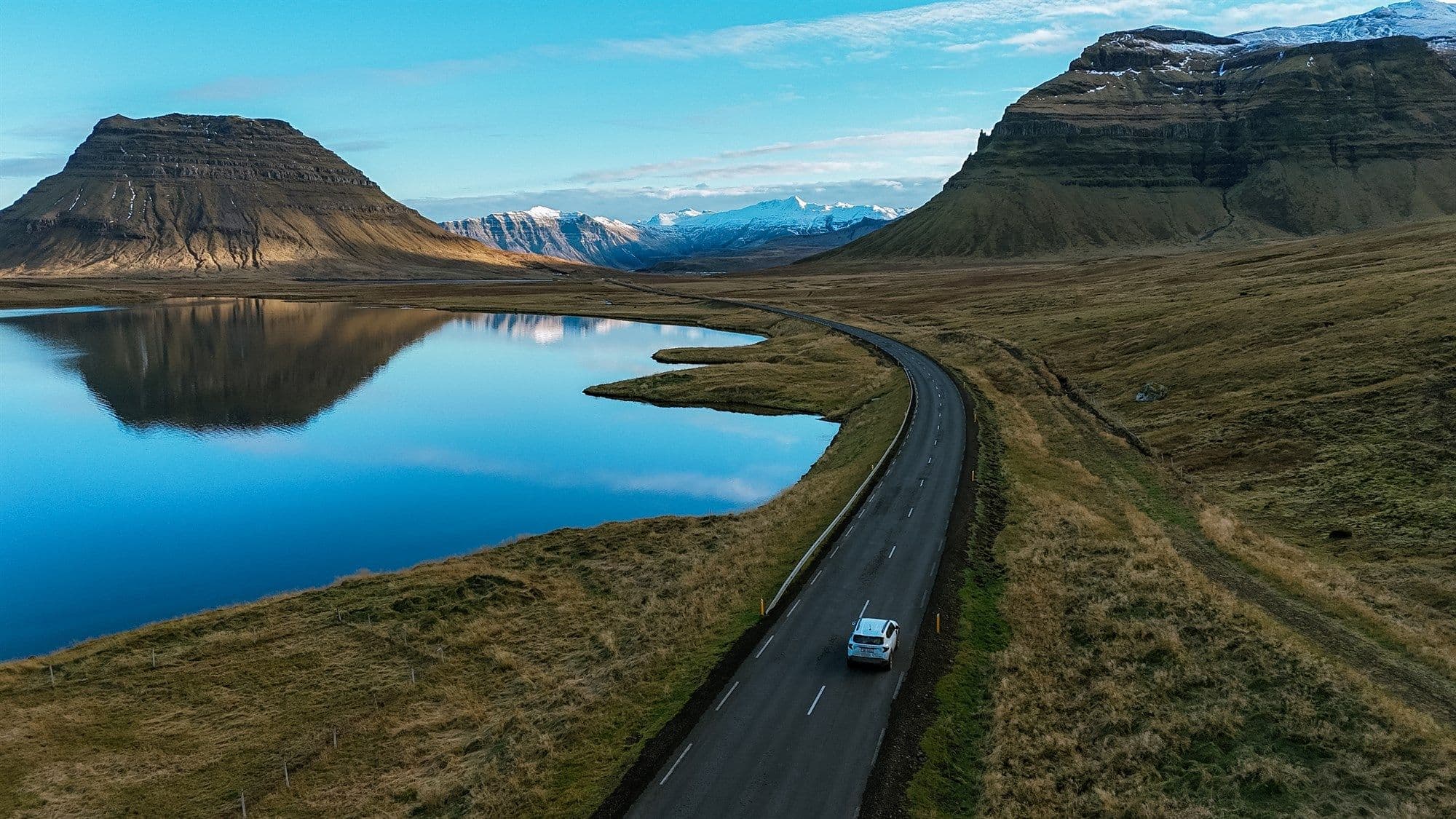
If you're reading this, you're probably equal parts excited and nervous about driving in Iceland during winter. That's completely normal. Winter here rewards curious travelers with golden daylight, steaming geothermal pools, and Northern Lights dancing across dark skies—but it also demands respect and preparation.
Here's what we want you to know upfront: winter driving in Iceland is possible with the right vehicle, honest self-assessment, and flexible mindset. Thousands of visitors do it safely every year. But it's not for everyone, and that's okay too.
This guide helps you decide if, when, and how to rent a car for winter travel in Iceland. We're a local team at Reykjavík Rent A Car, and we've spent years helping travelers navigate winter conditions safely. We fit studded winter tires on every vehicle, stock 4x4 options for rural routes, and genuinely want you to have a great experience—which sometimes means helping you understand when guided tours might serve you better than a rental car.
Winter Driving in Iceland: Quick Answers
Is it safe to drive in Iceland in winter?
Yes, if you prepare properly and stay flexible. Check road conditions daily on road.is, drive cautiously on icy surfaces, and be ready to adjust plans when the weather changes. Thousands of visitors rent cars successfully each winter in Iceland.
Do rental cars have winter tyres?
All reputable Iceland rental companies fit studded winter tires from November through April. At Reykjavík Rent A Car, winter tires are standard during the winter season—there's no hidden charge.
Do I need a 4x4?
It depends on your route. Staying around Reykjavík and the Golden Circle? A 4x4 is recommended but not always essential. Heading to the south coast, north, or rural areas? You'll want one. A 4x4 gives you better traction and ground clearance, but it doesn't make you invincible on ice.
How much daylight is there?
December gives you about 4-5 hours (roughly 11 AM to 3:30 PM). January extends to 5-6 hours. By February, you'll have 7-10 hours, and by March, it will reach 10-14 hours. Plan your driving around these windows.
Where should I check road and weather conditions?
Bookmark road.is for real-time road conditions, vedur.is for weather forecasts, and safetravel.is for travel warnings. Check all three before you drive, every single day.

How Safe is Driving in Iceland in Winter?
The honest answer: it's safe when you're prepared, cautious, and flexible with your plans.
Iceland isn't fundamentally dangerous, but winter conditions here differ from what most visitors expect. The real challenge isn't snow—it's wind. Gusts can exceed hurricane speeds, push vehicles sideways, and create sudden whiteout conditions even when the forecast looked clear twenty minutes earlier.
Key risks to understand:
- Rapid weather changes – Conditions can shift from clear to dangerous within minutes, particularly on exposed coastal roads and mountain passes.
- Ice and wind combination – Black ice forms around 0°C and is invisible. Strong winds make ice even more treacherous.
- Limited daylight – December and January give you only 4-5 hours of usable driving time, compressing what you can reasonably accomplish.
- Road closures and warnings – Roads can close without much notice when storms develop. What's open doesn't always mean what's safe.
Your safety depends on three things: current conditions, your winter driving experience, and your willingness to change plans. If you can't tick all three boxes, consider guided tours instead of self-driving. There's no shame in choosing the smarter option for your skill level.
Winter Conditions in Reykjavík and Beyond
Weather and Daylight (November–March)
Winter in Iceland runs from November through March, with December and January bringing the stormiest conditions and shortest days. Coastal temperatures hover around 0-2°C (32-36°F), though wind chill makes it feel significantly colder. You won't face extreme cold, but you will face extreme wind.
Daylight hours by month:
<table class="table table-inverse" cellpadding="3" cellspacing="3" border="5"><tbody><tr><td><p><b>Month</b></p></td><td><p><b>Sunrise</b></p></td><td><p><b>Sunset</b></p></td><td><p><b>Daylight Hours</b></p></td></tr><tr><td><p><span style="font-weight: 400;">December</span></p></td><td><p><span style="font-weight: 400;">~11:15 AM</span></p></td><td><p><span style="font-weight: 400;">~3:30 PM</span></p></td><td><p><span style="font-weight: 400;">4-5 hours</span></p></td></tr><tr><td><p><span style="font-weight: 400;">January</span></p></td><td><p><span style="font-weight: 400;">~11:00 AM</span></p></td><td><p><span style="font-weight: 400;">~4:30 PM</span></p></td><td><p><span style="font-weight: 400;">5-6 hours</span></p></td></tr><tr><td><p><span style="font-weight: 400;">February</span></p></td><td><p><span style="font-weight: 400;">~9:30 AM</span></p></td><td><p><span style="font-weight: 400;">~6:00 PM</span></p></td><td><p><span style="font-weight: 400;">7-10 hours</span></p></td></tr><tr><td><p><span style="font-weight: 400;">March</span></p></td><td><p><span style="font-weight: 400;">~7:30 AM</span></p></td><td><p><span style="font-weight: 400;">~8:00 PM</span></p></td><td><p><span style="font-weight: 400;">10-14 hours</span></p></td></tr></tbody></table>This limited daylight in December and January isn't just inconvenient—it fundamentally shapes what you can do. A drive that takes two hours in summer might be impossible to complete during December's brief daylight window.
Roads and Driving Reality
Reykjavík and the main routes around the capital are well-maintained throughout winter. Route 1 (the Ring Road) receives regular plowing and salting, particularly the sections between Reykjavík and popular destinations like Vík.
But "well-maintained" doesn't mean "always safe." Wind doesn't respect plowed roads. Black ice can form on any surface when temperatures hover near freezing. And distances between towns mean that getting stuck doesn't just inconvenience you—it can become genuinely dangerous.
The critical difference between the city and the countryside:
In Reykjavik, you're never far from help, roads get immediate attention after storms, and traffic patterns make conditions somewhat predictable. Once you leave the greater capital area, you're on your own. Cell coverage becomes spotty. Distances stretch. Weather systems move in fast. This is why locals constantly check conditions and adjust plans—and why you need to do the same.
Check these resources daily, not just once:
- road.is (Vegagerðin) – Updated 7:00-22:00 daily with color-coded road conditions
- vedur.is – Iceland Meteorological Office for weather forecasts and wind warnings
- safetravel.is – Active travel alerts and emergency information
When to change or cancel plans:
If road.is shows orange or red warnings on your route, don't drive. If vedur.is forecasts sustained winds above 15 m/s (54 km/h), reconsider exposed coastal drives. If safetravel.is issues warnings for your region, take them seriously. Icelanders don't issue warnings lightly.
Best Car to Rent in Iceland in Winter (2WD vs 4x4)
This is the question we hear most often, and the answer genuinely depends on where you're going and your experience level.
Quick recommendation: If you're asking whether you need a 4x4, you probably do. First-time winter visitors should default to 4x4 for anything beyond Reykjavík day trips. Experienced winter drivers can sometimes get away with 2WD for limited urban and Golden Circle routes, but only when conditions are favorable.
Vehicle Comparison for Winter Travel
<table class="table table-striped table-bordered table-hover" cellpadding="2" cellspacing="2" border="3" style="width: 1386px;"><tbody><tr><td style="width: 174.734px;"><p><b>Vehicle Type</b></p></td><td style="width: 294.266px;"><p><b>Best For</b></p></td><td style="width: 196px;"><p><b>Road Types</b></p></td><td style="width: 315px;"><p><b>Pros</b></p></td><td style="width: 339px;"><p><b>When to Avoid</b></p></td></tr><tr><td style="width: 174.734px;"><p><b>Compact 2WD</b></p></td><td style="width: 294.266px;"><p><span style="font-weight: 400;">City exploration, very short day trips in good conditions</span></p></td><td style="width: 196px;"><p><span style="font-weight: 400;">Main paved roads only</span></p></td><td style="width: 315px;"><p><span style="font-weight: 400;">Lower cost, easier parking, good fuel economy</span></p></td><td style="width: 339px;"><p><span style="font-weight: 400;">Any snow/ice, gravel roads, routes outside the capital area</span></p></td></tr><tr><td style="width: 174.734px;"><p><b>Compact 4x4</b></p></td><td style="width: 294.266px;"><p><span style="font-weight: 400;">Golden Circle, south coast to Vík, first-time winter drivers</span></p></td><td style="width: 196px;"><p><span style="font-weight: 400;">Paved roads and maintained gravel</span></p></td><td style="width: 315px;"><p><span style="font-weight: 400;">Better traction, adequate clearance, balanced cost</span></p></td><td style="width: 339px;"><p><span style="font-weight: 400;">Extended Ring Road attempts, deep snow, Highland approaches</span></p></td></tr><tr><td style="width: 174.734px;"><p><b>Mid-Size 4WD</b></p></td><td style="width: 294.266px;"><p><span style="font-weight: 400;">South coast to Jökulsárlón, multi-day itineraries, moderate experience</span></p></td><td style="width: 196px;"><p><span style="font-weight: 400;">Paved and winter gravel routes</span></p></td><td style="width: 315px;"><p><span style="font-weight: 400;">Comfortable ride, good storage, confident handling</span></p></td><td style="width: 339px;"><p><span style="font-weight: 400;">Only if you have zero winter driving skills</span></p></td></tr><tr><td style="width: 174.734px;"><p><b>Large 4x4</b></p></td><td style="width: 294.266px;"><p><span style="font-weight: 400;">Ring Road attempts, north/east Iceland, experienced winter drivers</span></p></td><td style="width: 196px;"><p><span style="font-weight: 400;">All winter-accessible roads</span></p></td><td style="width: 315px;"><p><span style="font-weight: 400;">Maximum traction, highest clearance, best stability in wind</span></p></td><td style="width: 339px;"><p><span style="font-weight: 400;">Urban-only trips where you'd waste its capabilities</span></p></td></tr></tbody></table>Important clarification: A 4x4 helps you accelerate and provides better traction, but it doesn't help you brake on ice, and it doesn't protect you from wind. Don't assume 4x4 gives you permission to ignore conditions. It simply gives you more options when conditions deteriorate.
For first-time winter drivers: Start with a compact or mid-size 4x4, stick to main routes, and give yourself permission to skip sections if conditions worsen. You can always return to Iceland another year to tackle more ambitious drives.
Winter Tires, Insurance, and What to Check Before You Drive
Before You Leave the Rental Location
Every vehicle from Reykjavík Rent A Car comes with studded winter tires during the season (November through mid-April). These are legally required and included in your rental rate. Here's what to verify at pickup:
Tires and visibility:
- Confirm winter tires are fitted (look for the M+S marking or snowflake symbol)
- Check tread depth if you're comfortable doing so (legal minimum is 3mm, but deeper is better)
- Test windshield wipers and washers—you'll use them constantly
- Locate the ice scraper and brush (we include these in every vehicle)
Lights and legal requirements:
- Headlights must stay on at all times—day and night, it's the law in Iceland
- Test both headlights and rear lights before leaving
- Know where your hazard lights are located
Fuel discipline:
- Fill up whenever you see a gas station outside Reykjavík
- Don't let the tank drop below half when traveling between towns
- Some rural stations close early or have limited hours in winter
Essential items to carry:
- Phone fully charged plus car charger
- Ice scraper and cloth (provided)
- Warm layers and gloves in the car, not just in your luggage
- Water and snacks for unexpected delays
Insurance Expectations
Iceland's winter conditions create unique insurance considerations. Standard CDW (Collision Damage Waiver) and TPL (Third Party Liability) are baseline coverage, but winter travelers should understand three additional scenarios:
Gravel Protection (GP): Flying stones from gravel roads or sections can crack windshields and damage paint. Gravel protection covers these repairs, which can otherwise cost thousands of dollars.
Sandstorm Protection (SAAP): Iceland's volcanic environment means ash storms and sandstorms that can damage paintwork and undercarriage. This coverage isn't universal across rental companies, but it addresses a real risk.
Theft Protection (THP): While Iceland has a very low crime rate and vehicle theft is rare, theft protection covers loss and damage if your vehicle is broken into or stolen.
Read your rental agreement carefully. Know your deductible. Understand what's covered and what isn't. Take photos of the vehicle from all angles before leaving the lot.

Driving Tips for Renting a Car in Reykjavík in Winter
**Speed and braking:**Drive slower than you think necessary. On ice, brake gently and far earlier than you would on dry pavement. Sudden inputs—whether accelerating, braking, or steering—can cause you to slide on the road surface.
**Following distance:**Triple your normal following distance. On icy roads, quadruple it. You need time and space to react when conditions change suddenly.
**Headlights law:**Keep headlights on at all times. This isn't optional—it's legally required year-round in Iceland, and it significantly improves visibility for you and other drivers.
**Photo safety:**Never stop on the road for photos. Use marked pullouts only. If there's no safe pullout, skip the photo. Social media isn't worth your life or someone else's.
**Fuel discipline:**Fill up whenever you pass a station outside the capital area. Stations are spread far apart, and some close early in winter. Running out of fuel in remote areas isn't just inconvenient—it's dangerous.
**What locals do differently:**Icelanders constantly check conditions, even for familiar routes. They say "ef veður leyfir" (if weather allows) when making plans. They turn around without ego when conditions deteriorate. Copy this mindset, and you'll be fine.
Northern Lights Self-Drive in Winter: What to Know
Winter is peak aurora season in Iceland, and having a rental car gives you the flexibility to chase clear skies when forecasts look promising. But Northern Lights hunting requires specific planning when you're driving.
**Best months and conditions:**November through March offer the darkest skies, with December and January providing the longest nights. The Northern Lights appear year-round, but you need darkness to see them—so September and April offer viewing opportunities too. You're looking for clear skies, KP index of 2 or higher, and as little light pollution as possible.
**Why flexibility matters more than distance:**You don't need to drive hours from Reykjavík to see the lights. You just need darkness and clear skies. Sometimes that's 20 minutes away at Grótta Lighthouse. Other nights, you might drive an hour south toward Selfoss to escape cloud cover. Check vedur.is cloud forecasts and remain flexible.
**Safe stop rules:**Only stop in marked parking areas or designated pullouts. Never park on road shoulders or in traffic lanes. If you're lucky enough to catch the lights while driving, find a proper place to park before stopping—the aurora will wait a few minutes while you locate safe parking.
**Return-time caution:**Aurora watching can keep you out past midnight. Remember that roads become icier as temperatures drop overnight. Give yourself extra time for the return drive, and stay especially alert for black ice forming on bridges and shaded sections.
Top Winter Trips You Can Do With Reykjavík Car Hire
Reykjavík Area Drives (Low Risk)
Geothermal pools accessible within 30 minutes:Laugardalslaug, Sundhöllin, and Sky Lagoon all offer winter soaking with minimal driving risk. These locations stay accessible even during moderate winter weather and make excellent backup plans when rural conditions turn poor.
**Museums and culture stops:**The Reykjavík Art Museum, Marshall House, and Harpa Concert Hall provide indoor alternatives when weather forces you off the roads. Having a car lets you visit multiple sites comfortably without relying on limited winter bus schedules.
**Coastal viewpoints near the city:**Grótta Lighthouse, Nauthólsvík Geothermal Beach, and Seltjarnarnes Peninsula offer aurora viewing spots and winter photography opportunities within 15 minutes of downtown.
Reykjanes Peninsula
The Reykjanes Peninsula delivers dramatic volcanic landscapes, geothermal areas, and coastal cliffs within 45 minutes of Reykjavík. This makes it an excellent choice for winter day trips, especially for travelers testing their comfort level before attempting longer drives.
Key sites: Kleifarvatn Lake, Bridge Between Continents, Gunnuhver hot springs, and Reykjanesviti Lighthouse. The peninsula receives regular maintenance as it contains the airport road, but exposed sections experience fierce winds.
**Conditions awareness:**Coastal roads here face extreme wind exposure. Check vedur.is wind forecasts before going, and reconsider if sustained winds exceed 15 m/s. The Reykjanes volcanic area experiences periodic activity—check safetravel.is for the current status.
**Vehicle recommendation:**A compact 4x4 handles the peninsula well in typical winter conditions. Upgrade to a mid-size SUV if winds are forecast above 20 m/s or if you're uncomfortable with wind exposure.
Short Day Trips vs Ambitious Plans
Realistic winter day trips from Reykjavík:
- Golden Circle loop: 4-6 hours depending on stops (doable in December daylight)
- South coast to Seljalandsfoss and Skógafoss: 3-4 hours (feasible year-round)
- South coast to Vík: 5-7 hours (requires full daylight window)
Ambitious plans requiring experience and flexibility:
- South coast to Jökulsárlón Glacier Lagoon: Full day, only attempt with 4x4 and flexible schedule
- Snæfellsnes Peninsula loop: Full day, weather-dependent
- Ring Road sections: Multi-day commitment, experienced winter drivers only
Set expectations clearly: winter reduces what's reasonably possible in a day. A route that feels easy in July might be impossible in December. Build buffer time, stay flexible, and don't over-schedule.

Who Should NOT Rent a Car in Iceland in Winter?
This might seem like strange advice from a car rental company, but your safety and satisfaction matter more than a booking. Some travelers are better served by guided tours rather than self-drive rentals.
Consider tours instead of renting if you:
- Have zero experience driving in snow or ice (learning in Iceland is risky for you and others)
- Cannot adjust your itinerary based on conditions (fixed flight times, cruise schedules, inflexible plans)
- Feel anxious about the idea of winter driving (anxiety affects judgment and reaction time)
- Want to visit remote areas without winter driving experience (north/east Iceland, Westfjords)
- Are traveling during peak storm season (late December through January) without flexibility
Additional situations where renting might not make sense:
- You want to drink at dinner without worrying about driving (Iceland has strict DUI laws)
- Your group includes members who are uncomfortable with winter driving conditions (anxiety spreads quickly in difficult conditions)
- You're visiting during a period of active volcanic or seismic warnings affecting road access
Alternatives to consider:
Guided day tours from Reykjavík cover the Golden Circle, the south coast, and most other popular destinations. Multi-day tours handle logistics while you enjoy the scenery. Bus transport connects major towns along Route 1. Staying in Reykjavík and taking day tours lets you experience Iceland without winter driving stress.
Choosing not to drive doesn't make you less adventurous; it makes you smart about your abilities and conditions. You can always return another winter with more experience, or visit in summer when conditions are easier.
Why Choose Reykjavík Rent A Car for Winter Travel?
We're not going to hit you with marketing speak about being "the best" or having "unbeatable" prices. What we will tell you is what makes us different as a local, independent company.
**Local winter knowledge:**Our team lives here year-round. We drive these roads in these conditions ourselves. When you call asking about specific routes or current conditions, you're talking to someone who actually knows—not reading from a script.
**Winter-ready vehicles:**Studded winter tires are standard during the season, included in your rate. We maintain our fleet carefully because we know what Icelandic conditions demand. Our 4x4 options range from compact crossovers to large SUVs, depending on your route and experience.
**City pickup convenience:**Don’t want to collect your car from the airport? Our Reykjavík city location sits in the city center with straightforward access. We offer flexible pickup times, key box options for early/late arrivals, and shuttle service when needed.
**Support and guidance:**We provide genuine route advice based on current conditions, not just what you want to hear. If we think your planned route is risky given the forecast, we'll tell you straight. We'd rather you have a safe, enjoyable trip than push you into something questionable.
**Direct booking advantage:**Booking directly through our site means no third-party markup, clearer communication, and easier modifications if your plans change due to weather.
Want to compare vehicle types and availability? Browse our current inventory and look for seasonal rates. You can switch between small, crossover, and SUV options to match your specific winter travel plans.
Book Your Winter Car Rental in Reykjavík
Ready to explore Iceland this winter? Browse our available vehicles and rates for your travel dates. We maintain transparent pricing, include winter tires in every rental, and provide honest guidance about routes and conditions.
Winter in Iceland rewards preparation and flexibility with experiences you'll remember forever. Let's get you on the road safely.