
A History of Iceland's Farm Animals
Icelandic wildlife is a big hit with tourists from all over the world. But did you know that some of Iceland’s most popular creatures actually play an important part in the food and agricultural industries? Agriculture is a big part of life in Iceland, and domesticated animals play a large part in this. As a country, Iceland raises and supplies most of its own meat, poultry and dairy items. Anyone who has seen photos of Iceland’s landscapes is familiar with how many Icelandic sheep and Icelandic horses you can see around the countryside, as these are some of the farm animals that play an important role in Iceland’s agriculture. Here, we’ll tell you a little bit more about Iceland’s farm animals.
Icelandic Horses: Iceland’s Most Iconic Animal
The Icelandic horse is one of the most famous animals in Iceland and a true symbol of the country’s heritage. When Norse settlers arrived over a thousand years ago, they brought these horses with them to help with transportation, farming, and survival in a harsh environment. Over time, strict breeding laws were introduced, and to this day, no horses can be imported into Iceland. This has kept the Icelandic horse one of the purest breeds in the world.

Today, Icelandic horses are known for their strength, calm temperament, and unique gaits, including the famous tölt. In 2026, horseback riding tours in Iceland are more accessible than ever, with guided experiences available year-round, including winter rides through snowy landscapes and summer tours under the midnight sun. If you want one of the most authentic experiences, consider exploring the Westfjords, where the landscapes are remote and untouched.
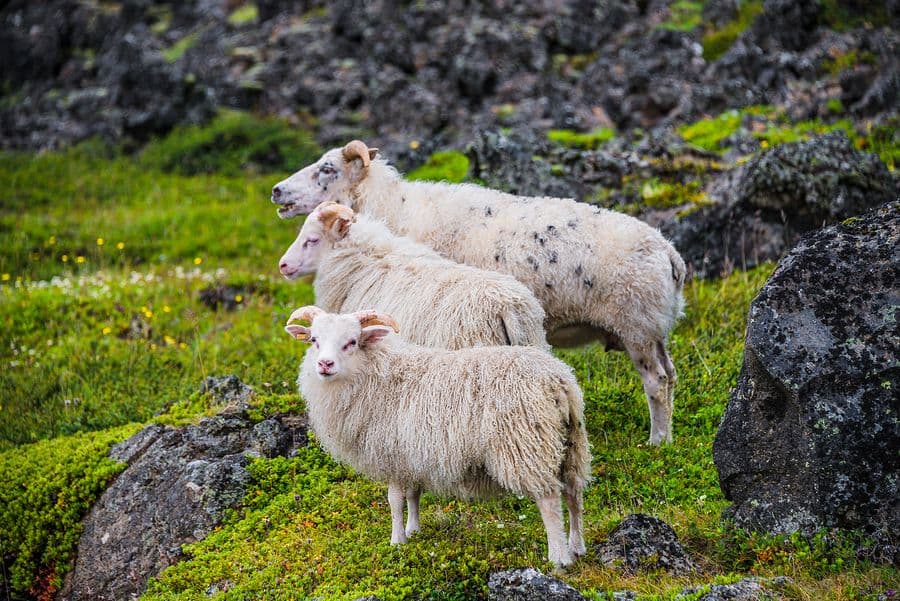
Icelandic Sheep: A Common Sight Across the Country
Icelandic sheep are one of the most common animals you will see when driving around the country. During summer, they roam freely across fields, mountains, and even near roads, so drivers should always stay alert. This seasonal free-roaming tradition continues in 2026 and is part of Iceland’s farming culture, with sheep gathered again during the annual réttir in autumn.

This breed has adapted perfectly to Iceland’s climate, with a dual-layered wool coat that protects against wind, rain, and snow. Like the Icelandic horse, sheep were brought by early settlers and have remained genetically pure for centuries. They are still essential for wool and meat production, and Icelandic wool remains a key part of local craftsmanship, especially in traditional lopapeysa sweaters.
Cows in Iceland: The Source of Skyr and Dairy
Icelandic cattle are another important part of the country’s agricultural system. Brought by settlers over a thousand years ago, these cows have remained genetically isolated due to strict import restrictions, preserving the strength of the breed.

In 2026, Iceland’s dairy industry continues to grow in global popularity, largely thanks to skyr. This traditional Icelandic dairy product is now exported worldwide, but tasting it fresh in Iceland remains a highlight. Visiting rural farms or countryside regions offers a closer look at how Icelandic cattle contribute to both local life and modern food production.
Other Farm Animals in Iceland
In addition to horses, sheep, and cattle, Iceland is home to pigs, goats, and poultry. Pig farming remains a steady part of Icelandic agriculture, supporting local food production.
The Icelandic goat is one of the rarest farm animals in the country. After nearly facing extinction in the 20th century, conservation efforts have helped slowly rebuild the population. As of 2026, Icelandic goats are still considered a protected heritage breed and are often kept on small farms rather than used for large-scale agriculture.
Where to See Farm Animals in Iceland
If seeing Icelandic animals is part of your travel plan, the best way to experience them is by exploring the countryside. Many of these animals roam outside urban areas, especially during the summer months. Regions like South Iceland, North Iceland, and the Westfjords offer some of the best opportunities to see Icelandic horses, sheep, and cattle in their natural environment.
Self-drive travel remains the most flexible and popular way to explore Iceland in 2026. It allows you to stop freely, take photos, and experience the country at your own pace.
To explore Iceland beyond the city and experience its wildlife and farm animals up close, browse our fleet and find the right car for your journey.